
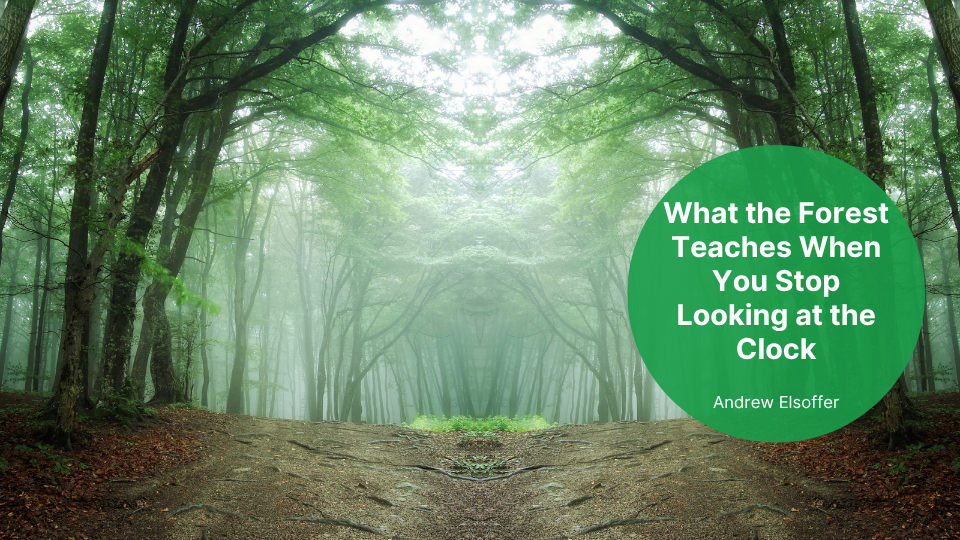
There is something different about entering a forest without checking the time. The world seems to slow down—not because the trees have changed, but because we have temporarily stepped away from the schedules, notifications, deadlines, and constant reminders of what comes next.
In everyday life, time often controls our attention. We hurry to work, rush through meals, check the clock between tasks, and measure our days by how much we accomplish. But inside a forest, that habit can begin to fade. Walking beneath a canopy of trees offers an opportunity to experience something we often overlook: the present moment.
The Forest Does Not Hurry
Trees do not grow according to our calendars. A stream does not become impatient because it has not reached its destination. Birds do not appear concerned about whether they are five minutes ahead or behind schedule.
Nature operates according to its own rhythms.
Spending time outdoors can remind us that not everything needs to happen immediately. A walk can take longer because you stop to observe sunlight moving across the leaves. You might pause to listen to birds, notice the texture of tree bark, or watch clouds changing above the trail.
These moments may appear insignificant, but they encourage us to pay attention rather than simply move from one task to another.
Walking Without a Deadline
When there is no appointment waiting at the end of a trail, walking becomes less about reaching a destination and more about experiencing the journey.
You notice details that would normally disappear into the background—the sound of footsteps, the scent of damp earth, the movement of branches in the wind, or the changing colors around you.
Without the pressure to move quickly, curiosity has more room to grow.
You might take a different path simply because it looks interesting. You might stop somewhere peaceful without needing a reason. You begin to understand that an experience does not always need to produce something measurable to be valuable.
Learning the Value of Patience
Forests are natural reminders of patience.
A tiny seed can take years to become a tree. A narrow trail may have developed through countless footsteps. Seasons arrive and disappear without asking whether we are ready for them.
This perspective can change the way we think about our own progress.
Not every goal produces immediate results. Skills take practice. Relationships take attention. Personal growth takes time. When we become accustomed to instant responses and quick results, waiting can feel frustrating. Nature quietly demonstrates another possibility: some of the most meaningful things cannot be rushed.
Making Space for Your Thoughts
One of the most valuable things a forest can provide is mental space.
Away from constant notifications and crowded environments, thoughts that have been pushed aside may become easier to notice. A problem that seemed overwhelming might feel more manageable after a quiet walk. An idea may emerge simply because there is finally enough silence to hear it.
The forest does not necessarily provide answers. Instead, it can provide the space in which we discover our own answers.
Rediscovering Simple Joy
Modern life can make entertainment complicated. We often need screens, plans, destinations, or activities to keep ourselves occupied.
A forest offers something much simpler.
You can sit beneath a tree. Walk along a trail. Watch sunlight pass through leaves. Listen to the wind. Notice insects moving through the grass.
None of these activities needs to be productive.
And perhaps that is exactly why they feel refreshing.
Leaving the Clock Behind
The forest teaches a lesson that is easy to forget: life is not only about keeping up with time; it is also about experiencing it.
When we stop checking the clock, even briefly, we create room to notice what normally gets missed. We become more aware of our surroundings, more patient with the journey, and perhaps more comfortable with simply being present.
You do not need a distant wilderness or an elaborate adventure to experience this lesson. Sometimes, all it takes is a quiet trail, an open afternoon, and the willingness to stop asking, “How much time do I have left?”
Instead, look around.
The forest has been moving at its own pace all along.